

DXB’s future takes flight as Dubai moves to new Al Maktoum Airport
CEO Paul Griffiths reveals vision for seamless travel and future growth
DUBAI – Dubai’s aviation landscape is preparing for its most ambitious transformation yet.
Within the next decade, every flight, passenger, and service currently operating at Dubai International Airport (DXB) will move to the colossal new Al Maktoum International Airport (DWC) in Dubai South. The full transition, announced by Dubai Airports CEO Paul Griffiths, is set to take place by 2032 – marking the beginning of a new era in global air travel.
Expected to handle an astonishing 260 million passengers a year once complete, Al Maktoum International Airport will be the world’s largest capacity airport. The move comes as DXB nears its operational limits, with annual passenger numbers projected to reach 115 million by the end of 2031.
Griffiths revealed the timeline ahead of the Dubai Airshow 2025, saying, “By the end of 2031, passenger numbers are anticipated to approach 115 million, and by 2032, operations will transition to Al Maktoum International Airport to accommodate around 124 million passengers.”
What is driving the move?
Dubai International Airport has held its crown as the world’s busiest international hub for 11 consecutive years, but that success is also creating pressure. Passenger traffic is set to surpass 100 million within the next two years, with 95.3 million expected by the end of 2025 – a new record for DXB.
Insights from Paul Griffiths, Chief Executive Officer of Dubai Airports, as DXB is set to welcome 93.5 million guests this year, with innovations underway to expand its capacity to 100 million passengers in the next few years. Dubai Airports remains committed to delivering the… pic.twitter.com/3KBiZiVuLX
— Dubai Media Office (@DXBMediaOffice) October 7, 2025
With capacity stretched to the limit, Dubai Airports is introducing new technology, additional aircraft stands, and enhanced check-in facilities to keep operations running smoothly in the meantime. Yet even these measures, Griffiths explained, can only go so far.
“We’re working very hard on technology that will speed people through airports,” he said. “If we can reduce the time that people go through all the processes, we can increase both speed and convenience to customers.”
How will the transition happen?
Rather than an overnight change, the move from DXB to DWC will be phased. Airlines will gradually migrate operations to Al Maktoum as capacity opens up. Flydubai is expected to be among the first to relocate, utilising the current passenger terminal and single runway before the massive new complex is fully ready.

“As we run out of slots at DXB, some airlines will start to move to DWC,” Griffiths noted. “Flydubai will likely be one of the first movers, and we’re putting facilities in place to enable that.”
The Dh128 billion Al Maktoum megaproject, already operational for cargo, executive, and charter flights since 2010, is undergoing significant expansion. When finished, it will not only redefine passenger capacity but also integrate advanced mobility systems, an underground train network, and cutting-edge sustainability technologies.
When will DXB reach its limit?
By 2031, DXB will have reached its full operational capacity – around 115 million passengers annually. Griffiths emphasised that keeping both airports running in parallel would not make economic sense. “There’s little point in operating two major hubs within 70 kilometres of each other,” he said.
He also pointed out that by 2032, DXB’s infrastructure will be nearing the end of its practical lifespan. “Every single asset at DXB will be close to the end of its useful operating life, so the economics of keeping it open will not really be possible unless we invest huge amounts of money.”
While no official redevelopment plan for the DXB site has been confirmed, Griffiths hinted that developers are already eyeing the valuable land. The relocation to Dubai South, he added, will also ease congestion in the city’s northern areas and support Dubai’s southward urban expansion.
What will Al Maktoum Airport look like?
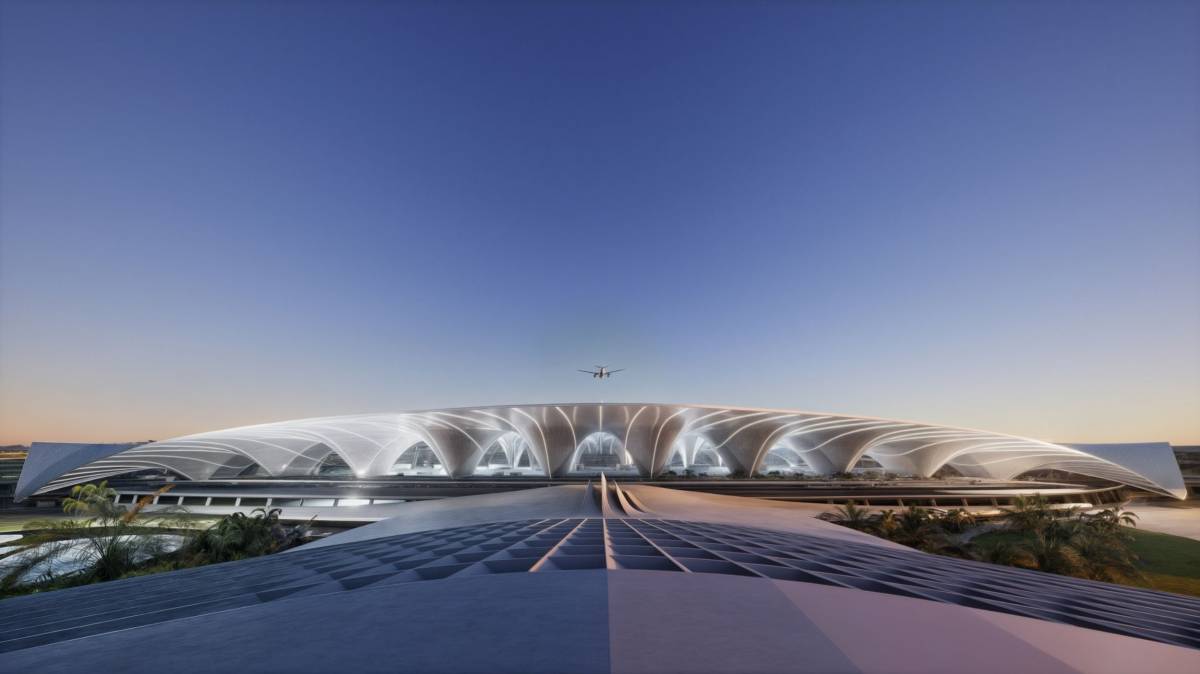
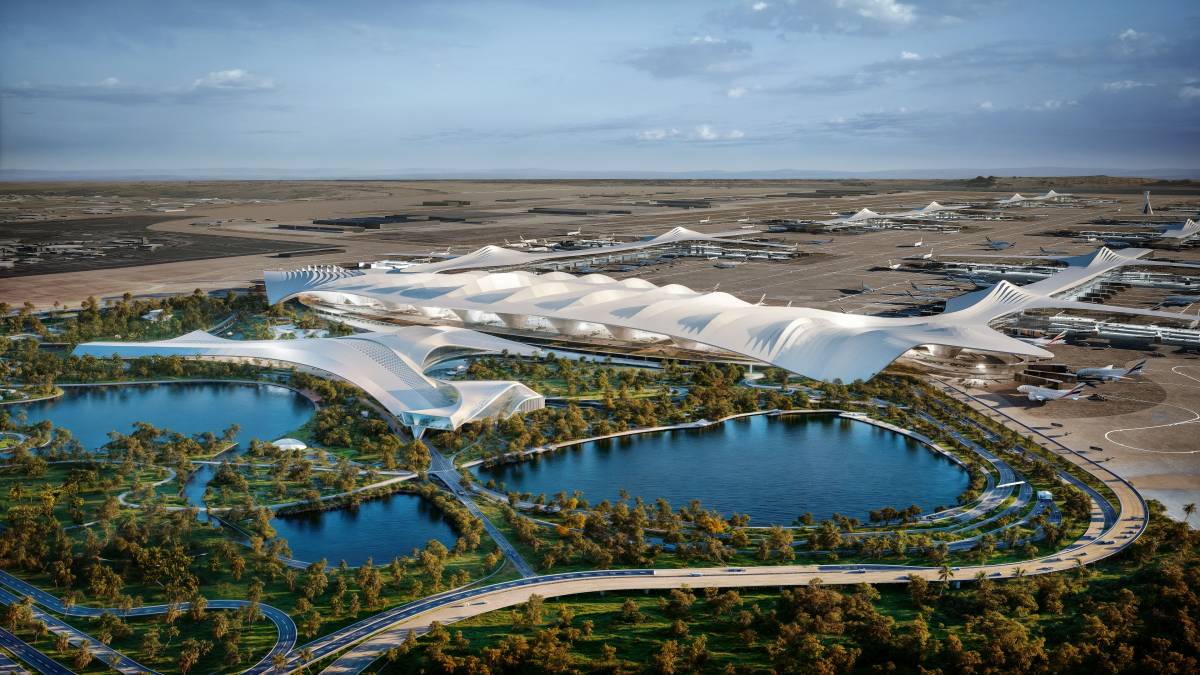
Architectural renderings released by Dubai Media Office show a futuristic terminal complex designed to offer a completely seamless travel experience.
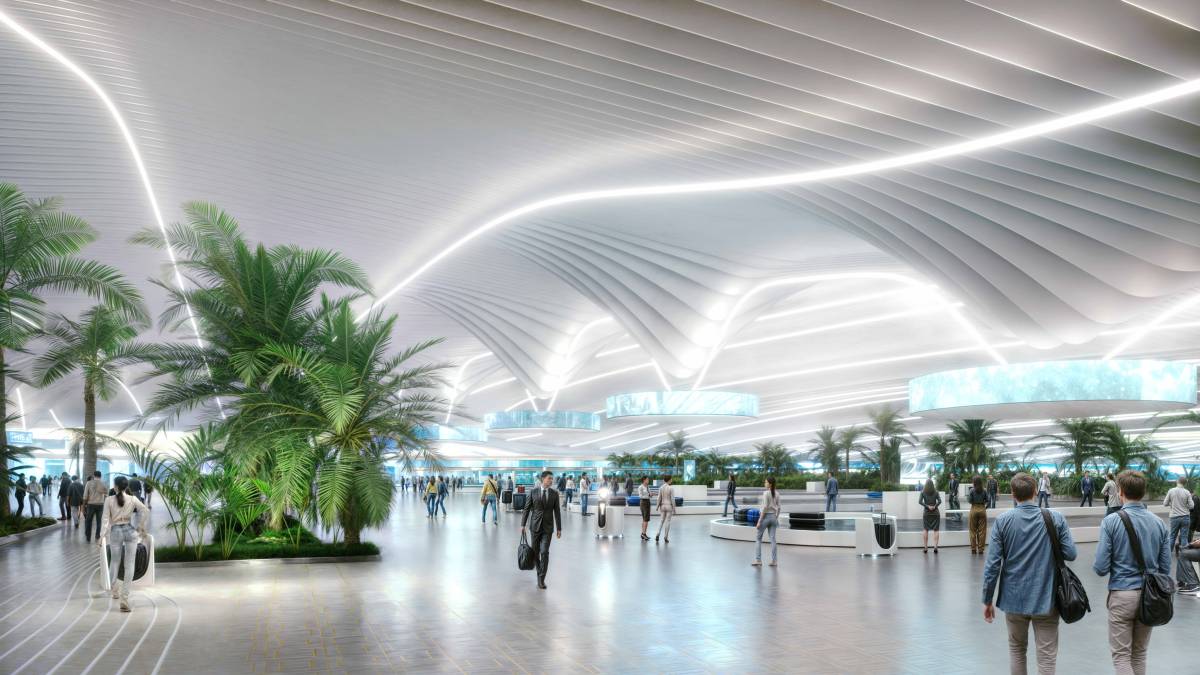
The concept includes advanced check-in technology, integrated transport systems, and expansive passenger areas reflecting Dubai’s vision of hospitality and innovation.
Griffiths described his vision for the airport experience as “completely frictionless.” Highlighting the success of DXB’s new Red Carpet corridor – where passengers move through the airport without stopping – he explained, “Our idea is that every single process should be seamless. From the moment you step out of your car or off the metro, you should be able to go straight through to your lounge, restaurant, or shop without delay.”
Where does the future lead?
The Dubai Airshow 2025 will play a key role in spotlighting the future of Al Maktoum International Airport. The upcoming edition, opening on November 17, is expected to be the largest in its history, bringing together more than 1,500 global aerospace and defence companies, 148,000 visitors, and over 200 aircraft on display.
Held under the theme ‘The Future is Here’, the airshow will showcase innovations in sustainability, AI-powered aviation, advanced air mobility, and space technologies—all of which align with Dubai’s broader vision for the new airport.
Griffiths summarised Dubai’s aviation ambitions with characteristic confidence: “By 2032, Al Maktoum International Airport will be ready to take over as the heart of Dubai’s air network. The future of global aviation will flow through Dubai South.”